Archaeology Blog
2026 Field School Week 2
By Allison Jewell
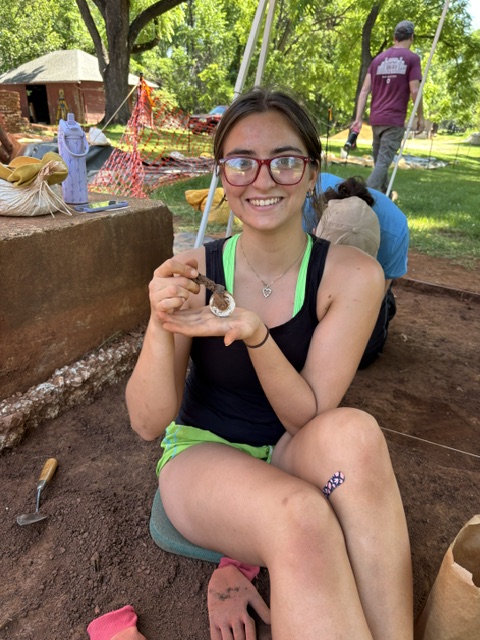
We started off Week 2 by completing the survey we began last week. We cleared off the first few layers as well as some potential features. After this, we took the test unit down about a foot to reach the subsoil. By Thursday, we had completed the survey and then split up to our respective sites (Quarter Site or 1857 Slave Dwelling). I was stationed at the 1857 Slave Dwelling on the south side of the house, where once upon a time, there was a doorway. This was a very nice change of pace from the other sites I had worked on so far, as the amount of artifacts present is significantly higher. My site partner Dana and I worked on clearing off the remnants of topsoil to uncover the unexcavated soil beneath. Following a clean scrape, we started finding artifacts. Once we started digging the first layer, there were tons of things popping up in the ground. We found dozens of nails as well as ceramic and glass fragments. Some of our more interesting finds were a large link of chains and a fully mobile porcelain wheel, pictured below. As of right now, we have a horseshoe embedded in the dirt of the next layer, and we hope to be able to uncover that and more over the next few weeks.
By Kat Booras
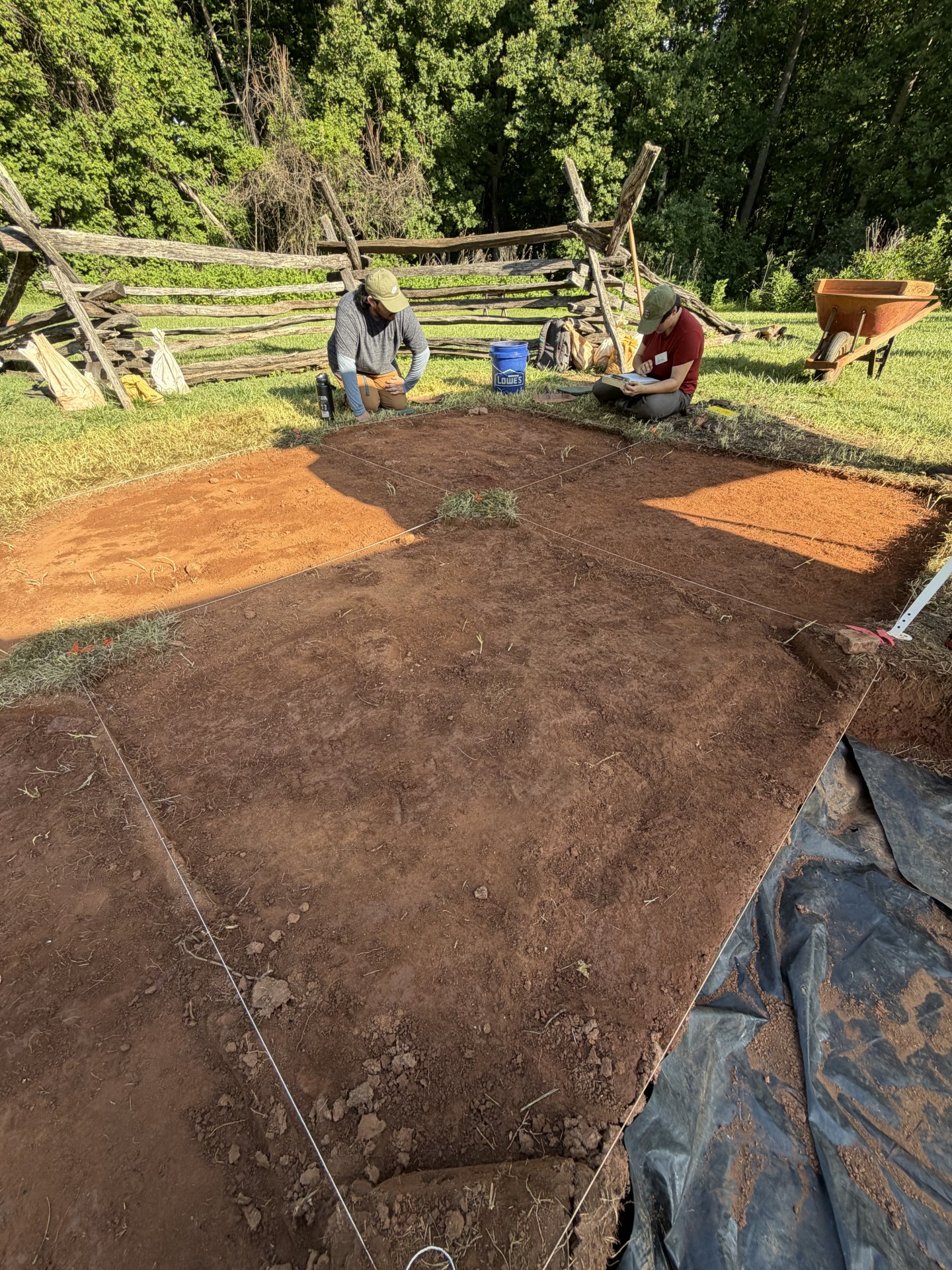
This week at the Quarter Site, we continued excavating our 5 x 5 ft unit until we reached a cobble layer. Once we exposed the cobbles, we mapped their locations, recorded elevations, and weighed the loose cobble pieces. While working in the unit, we recovered several interesting artifacts, including 4 wrought iron nails, a piece of what is presumably pearlware, and some coal. The pearlware was especially significant because it may help give us a timeframe for the use of the site, as well as a look into the daily lives of the occupants. As we continued excavating, we carefully documented every feature, artifact, and change in soil to help with future interpretations of the site.
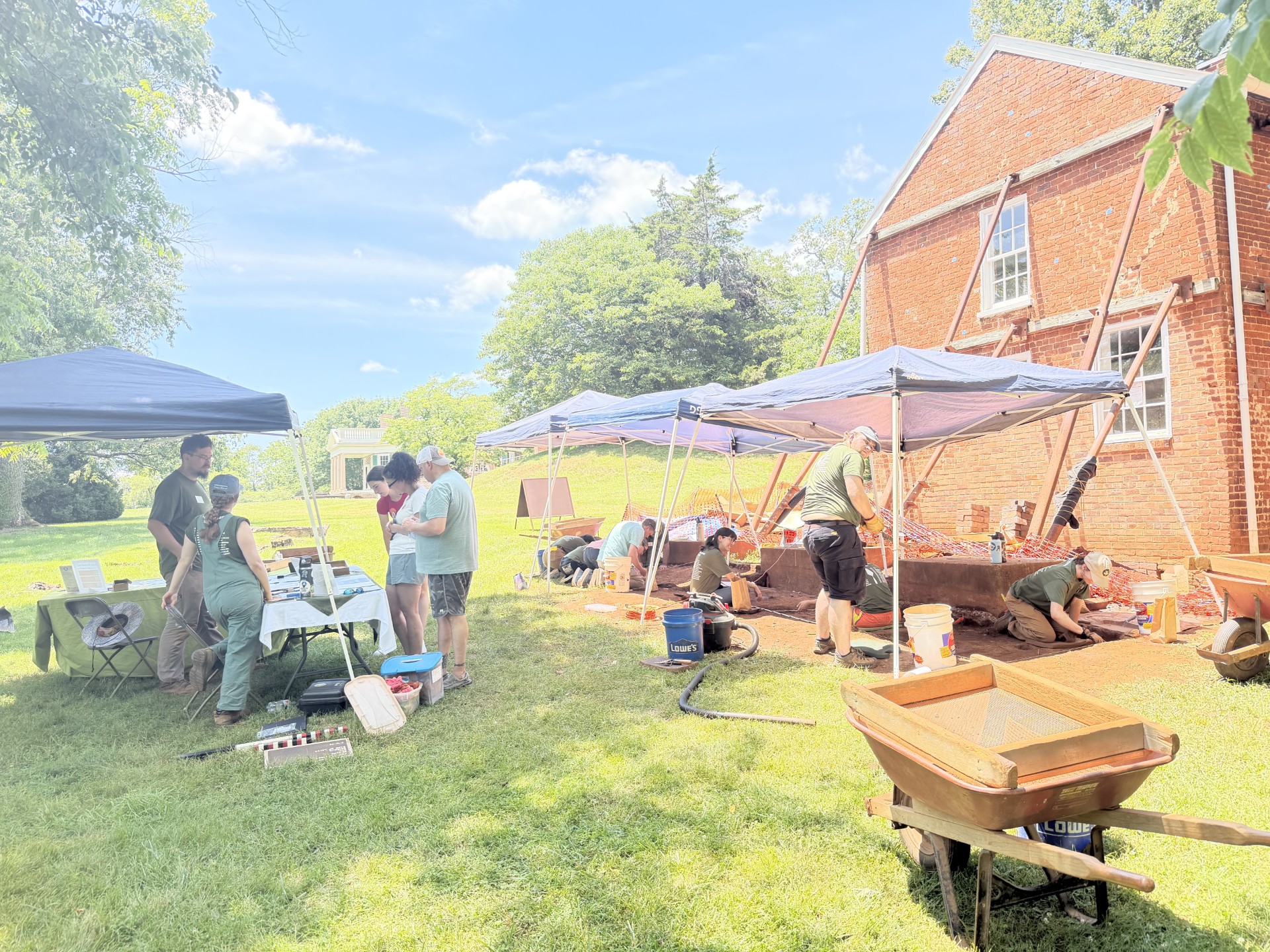
On June 13th, the 2026 Poplar Forest Field School held a Public Archaeology Day. The event took place at the 1857 Slave Dwelling site. Most of our work consisted of continuing the dig by troweling the excavation units and looking for artifacts, features, and soil changes. Throughout the day, we recovered several pieces of glass in a variety of colors including blue, green, and brown. One excavation unit also uncovered a horseshoe, which was very exciting for both members of the field school and visitors to the site. Along with excavating, we had the opportunity to interact with members of the public and share our knowledge of Poplar Forest and archaeology. We demonstrated how to properly trowel a site, explained what archaeologists are typically looking for while excavating, and discussed the history of the 1857 Slave Dwelling. It was extremely rewarding to share what we have learned so far in field school, as well as the importance of preserving and studying these sites.