Archaeology Blog
2026 Field School Week 3
2026 Field School Week 3
By Dana Smith
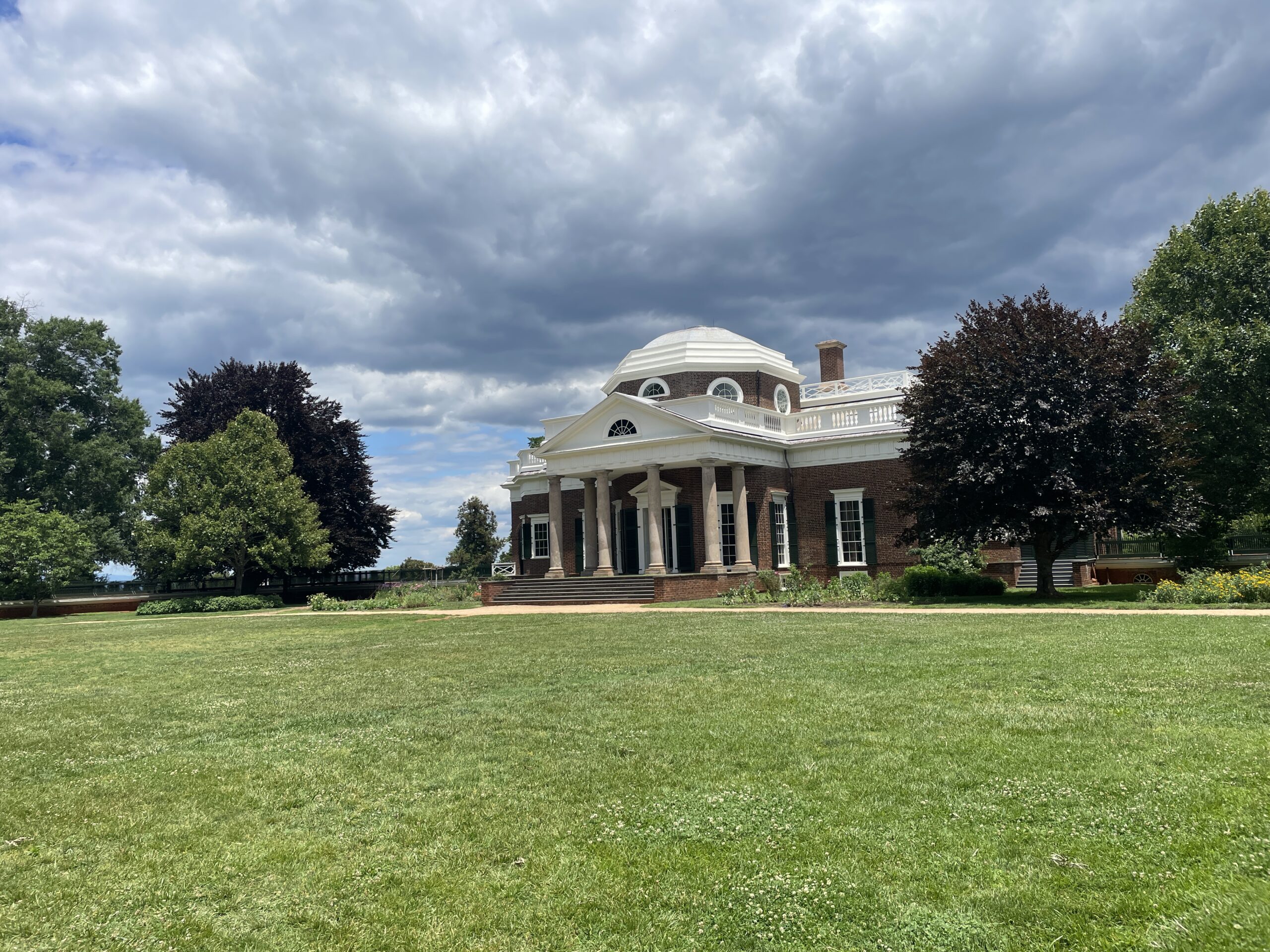
We started this week with a field trip to Monticello, Jefferson’s estate an hour north of Poplar Forest. The architecture really embodied the differences in purpose between his estates. Monticello was a place where he accepted many influential (and affluent) guests from all over the US and Europe. Poplar Forest was his retreat from the public life that politics and wealth demanded. We looked at an excavation unit dug by the archaeologists there, and it shocked all of us to see the thick layer of clay that Jefferson’s enslaved laborers had to dig, move, and flatten in order to build his estate. It’s an unthinkable amount of labor. Poplar Forest has a similar type of landscape manipulation for its sunken lawn and mounds on the east and west sides of the house, but to a different degree than the shaved mountaintop at Monticello.
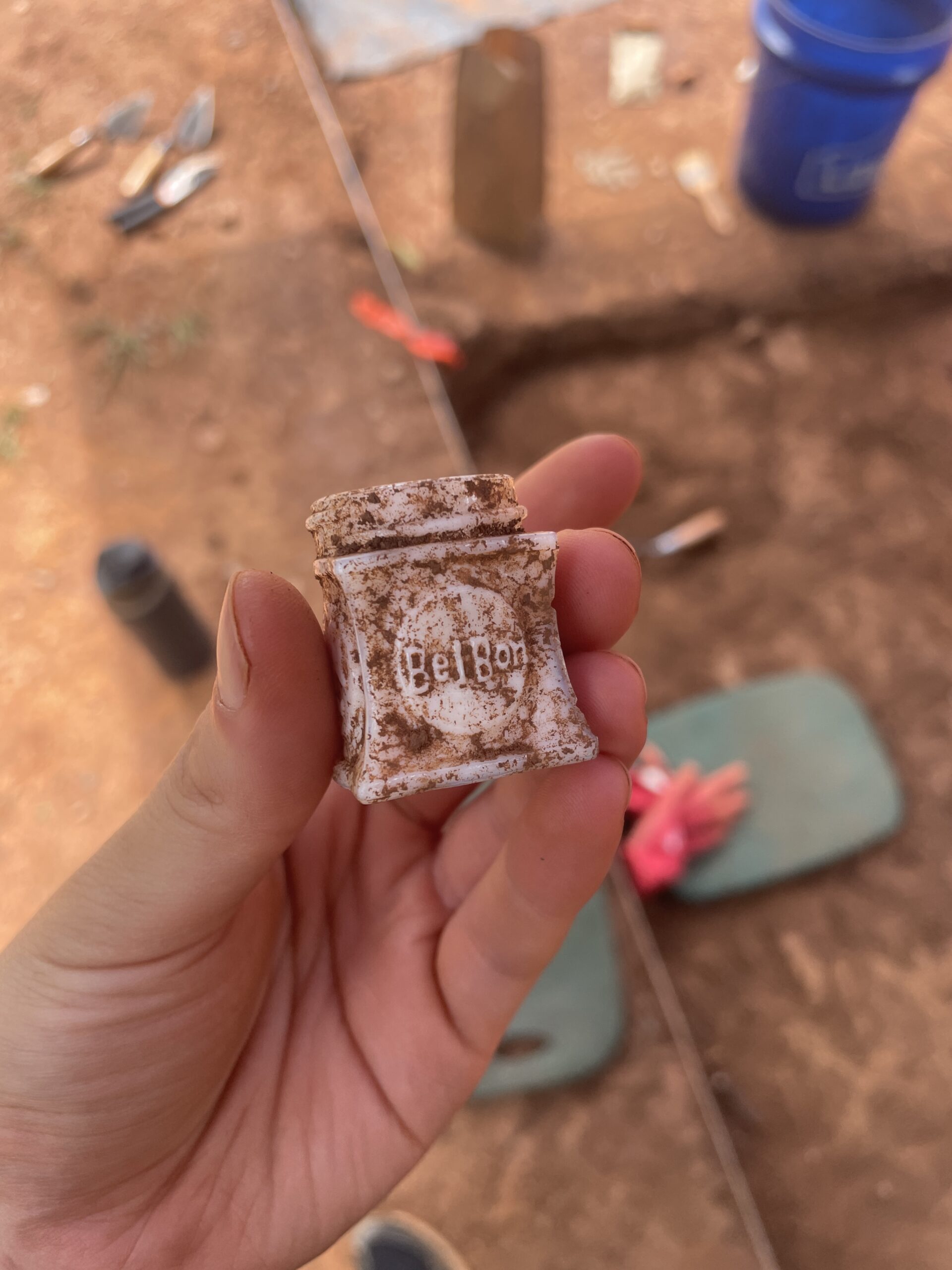
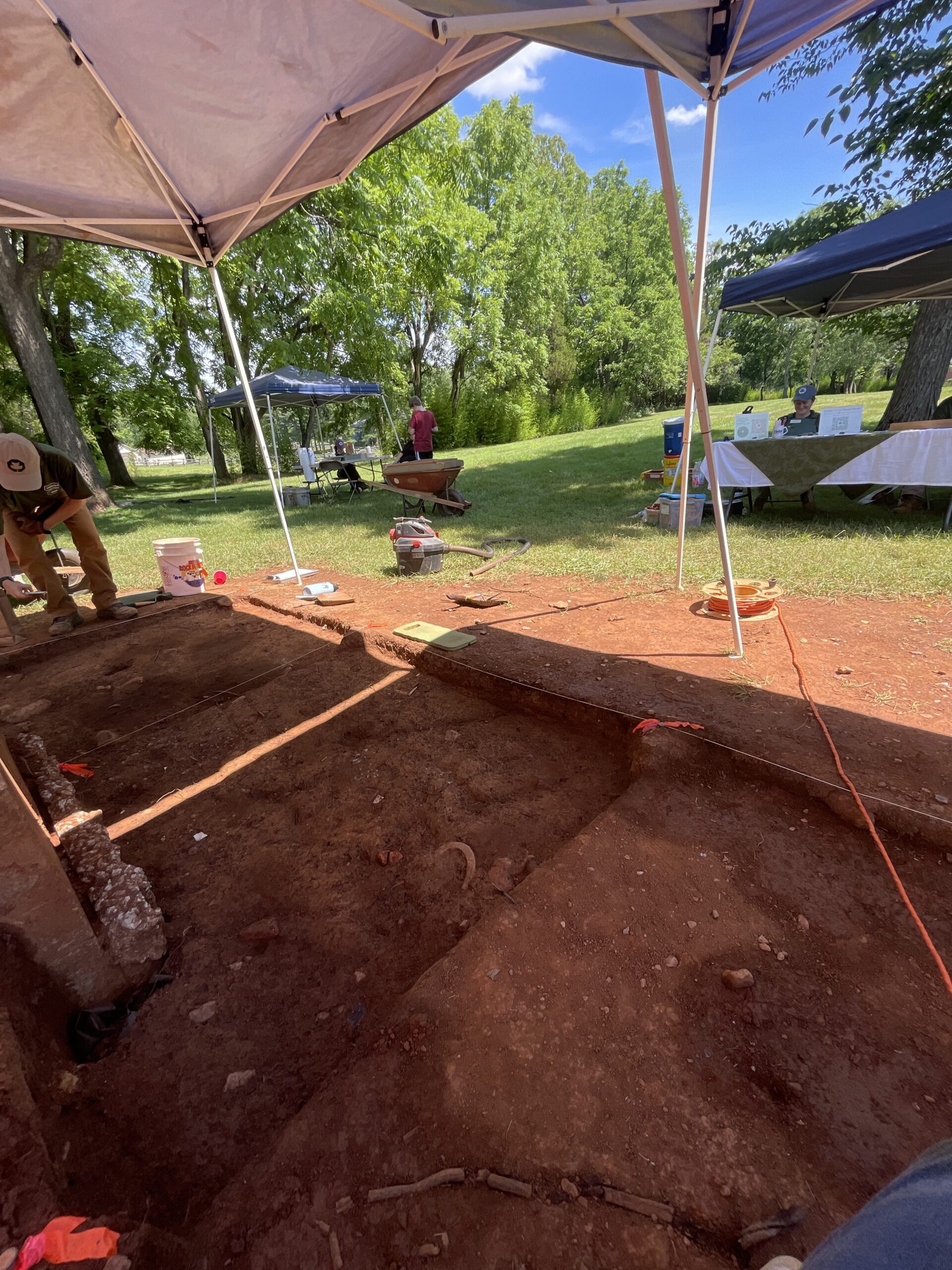
The 1857 Slave Dwelling has continued to turn up a steady stream of artifacts, from hundreds of nails to hundreds of glass shards in one layer alone. A few notable finds have been the discovery of a milk glass BelBon cosmetic jar for cold cream, which tentatively dates to the early 1900s, a horseshoe, a porcelain doll leg, an amber marble, a whole glass bottle, and two features in the eastern-most unit. The doll leg and marble point to the presence of children in the area, perhaps living in the house before it was used as a storage space in the later 20th century. Its time as a storage space could explain the presence of agricultural tools like the horseshoe and an agricultural spike (aka a harrow tooth). We’re looking at a later time period than the 1857 name would suggest, but the story the units are telling is still interesting.
By Ryan Salzgaber
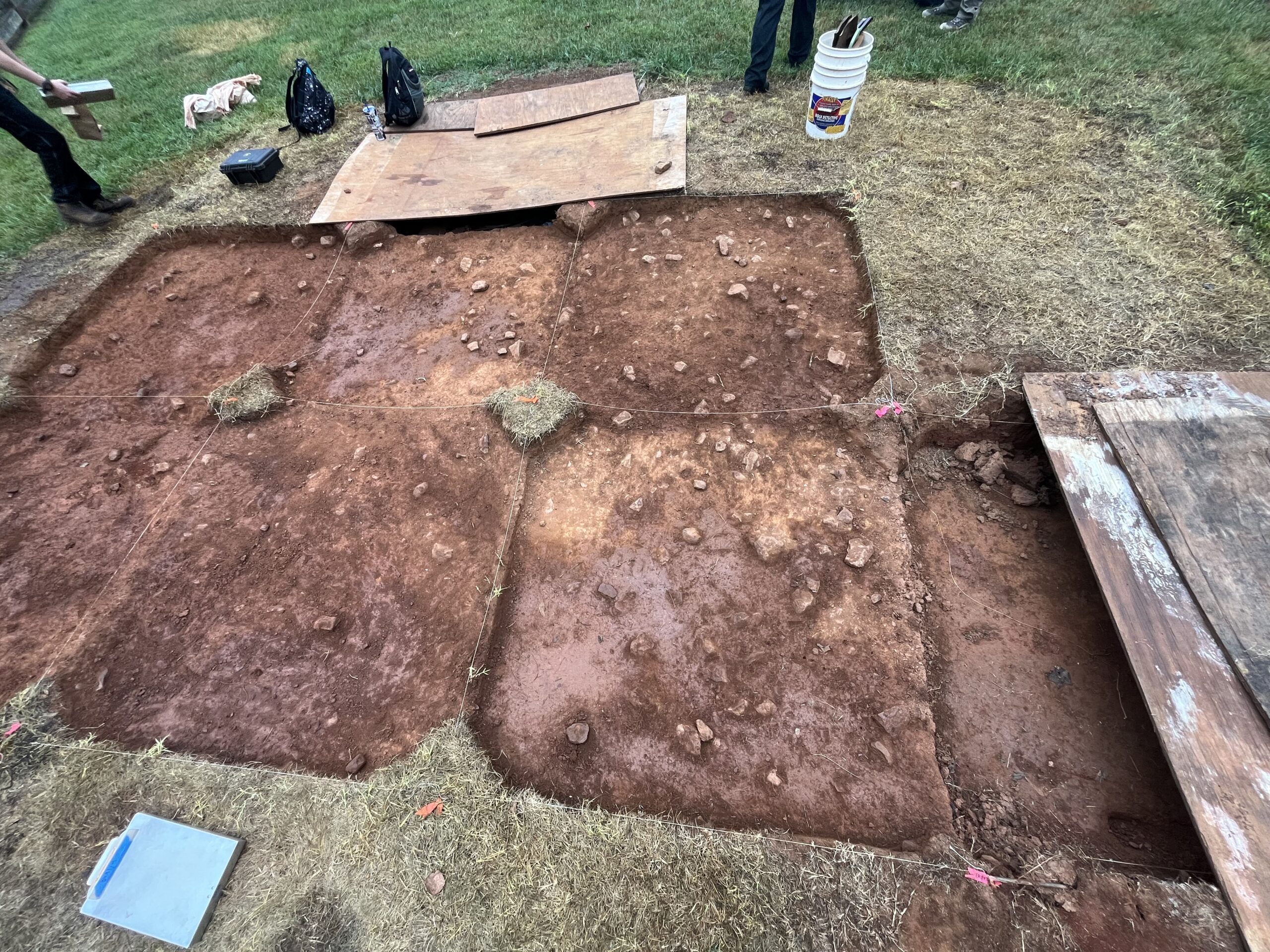
Moving on to the Quarter Site, we continued our excavations of 5×5 units from last week, exposing more of the cobble layer in each unit. Unlike the 1857 Slave Dwelling, there weren’t many artifacts to be found at this upper layer, aside from the occasional ceramic and possible brick fragment, but that doesn’t mean we weren’t able to make interesting discoveries. We found remnants of previous archaeological excavations in several places, notably nails and string meant to denote boundaries of individual archaeological units. We intend to look in our mapping software, ArcGIS, to figure out what unit these nails and string belong to and see just how far this previous unit extends. As we continued to carefully map, weigh, and expose more cobble in these upper layers, we noticed there were larger and significantly more cobbles on the southernmost units than there were in the northern units. We theorize that the south units could have been the location of a small rock path, or perhaps that the cobbles were used to artificially elevate the landscape to make it level with the hillside. We are expecting to discover more interesting information as we excavate lower into the units and are hoping to find artifacts or features that will inform us about the history of the Quarter Site and document them for future interpretations.