Archaeology Blog
2026 Field School Week 4, Part One
It’s Not Always About Digging
By Kristen Wood
Hi! I’m Kristen, one of this year’s field school students. By day, I’ve spent the last 20 years working in healthcare, so trading scrubs for trowels has been quite the career change. I’m currently working toward my anthropology degree, and while I came here expecting to dig holes and find cool stuff, field school has quickly taught me that archaeology is so much more than that. So, welcome to week four through the eyes of someone who’s learning something new every single day.
This week proved that archaeology isn’t just about what’s in the ground, it’s also about understanding the landscape, preserving artifacts, and occasionally wrestling with split-rail fences in the Virginia heat.
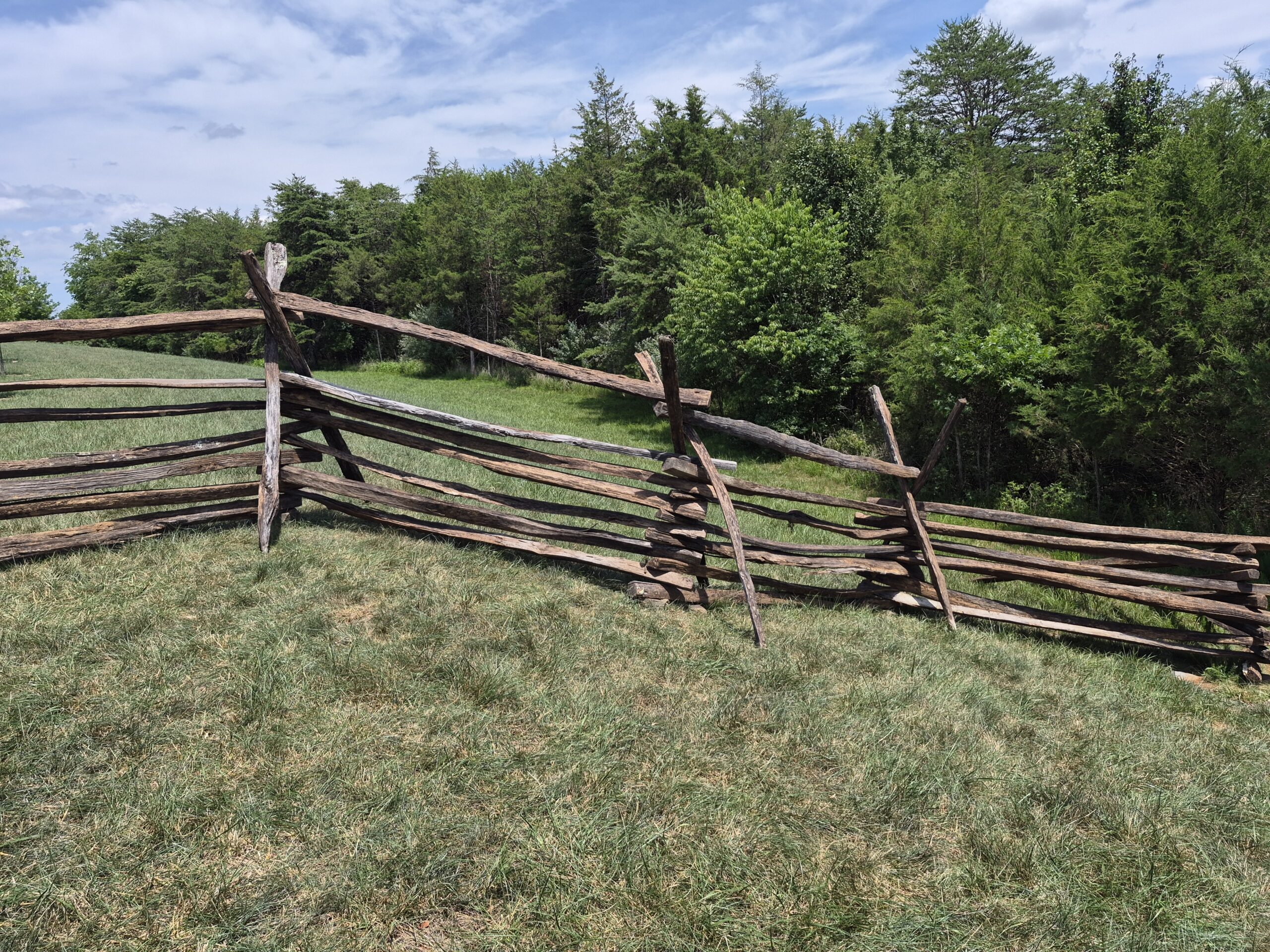
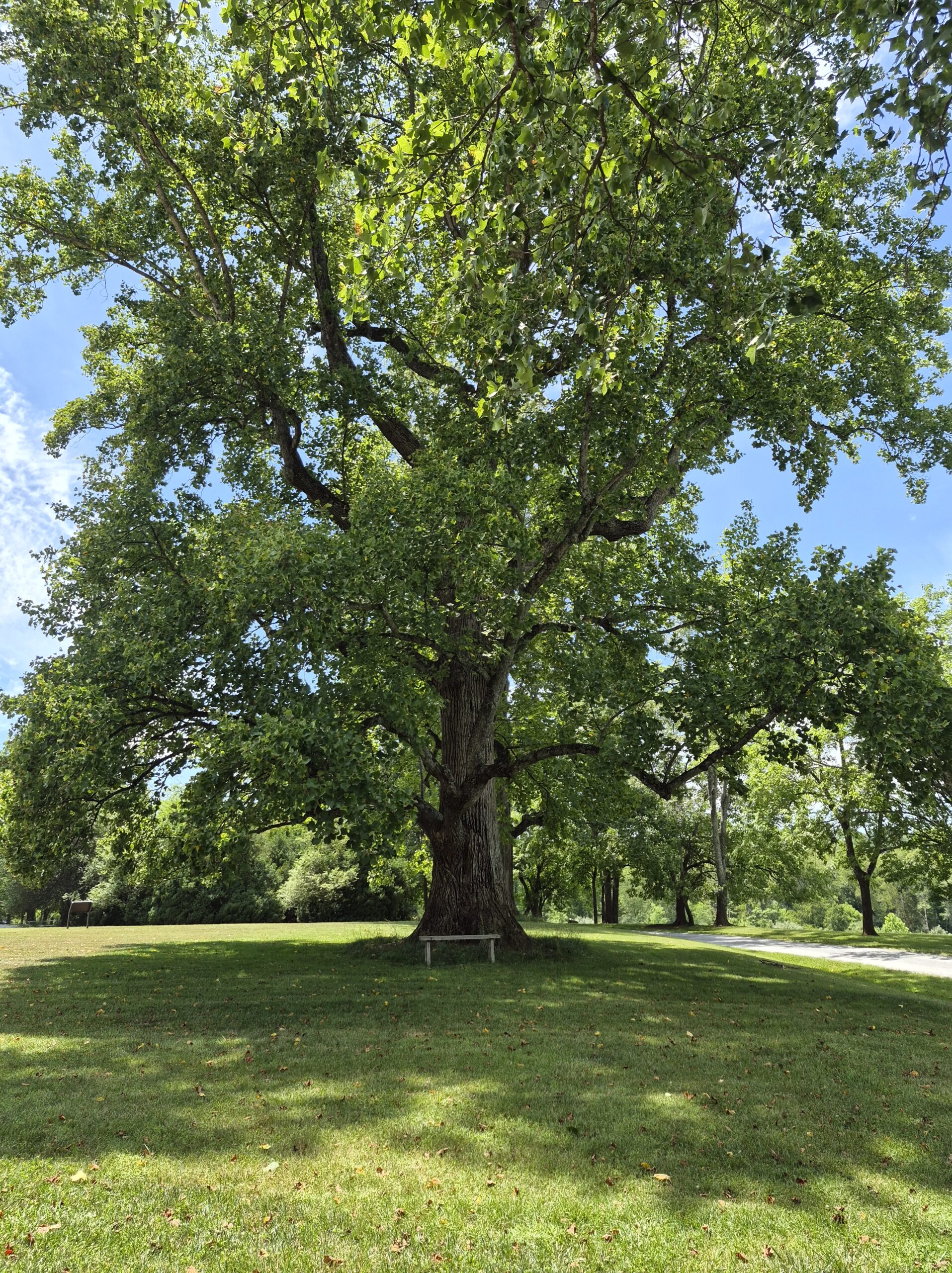
We kicked off Monday with a lecture on environmental and landscape archaeology before heading to Camp Ruthers, a former YWCA camp on Poplar Forest property, to gather supplies for a split-rail fence. I honestly didn’t expect fence building to be part of archaeology, but this year we had the opportunity to add a new fence at the front entrance along the historic boundary of Poplar Forest. After hauling everything to their final destination, we spent the afternoon building it. It definitely gave me a new appreciation for the people who built miles of these fences without power tools…or air conditioning.
Tuesday started with a zooarchaeology lecture, which was fascinating because who knew animal bones could tell us so much about how people lived and what they ate? Then we headed into the lab where we washed artifacts, worked through the process of bagging and labeling finds, and learned how to catalog everything using Re-Discovery digital software. It was interesting to see everything that happens after artifacts leave the field and how important careful documentation is to the archaeological process. I don’t think I realized before field school just how much work happens after something is found. Digging may be the exciting part, but the lab is where those discoveries really begin to tell their story.
Wednesday was a little bit of everything. We had a morning lecture, spent a few hours working in our units before lunch, squeezed in another hour of fieldwork afterward, took a mini tour around the property to discuss landscapes, and wrapped up the day with another lecture. It made for a full day, but I like when we get to bounce between the classroom and the field because everything starts clicking together.
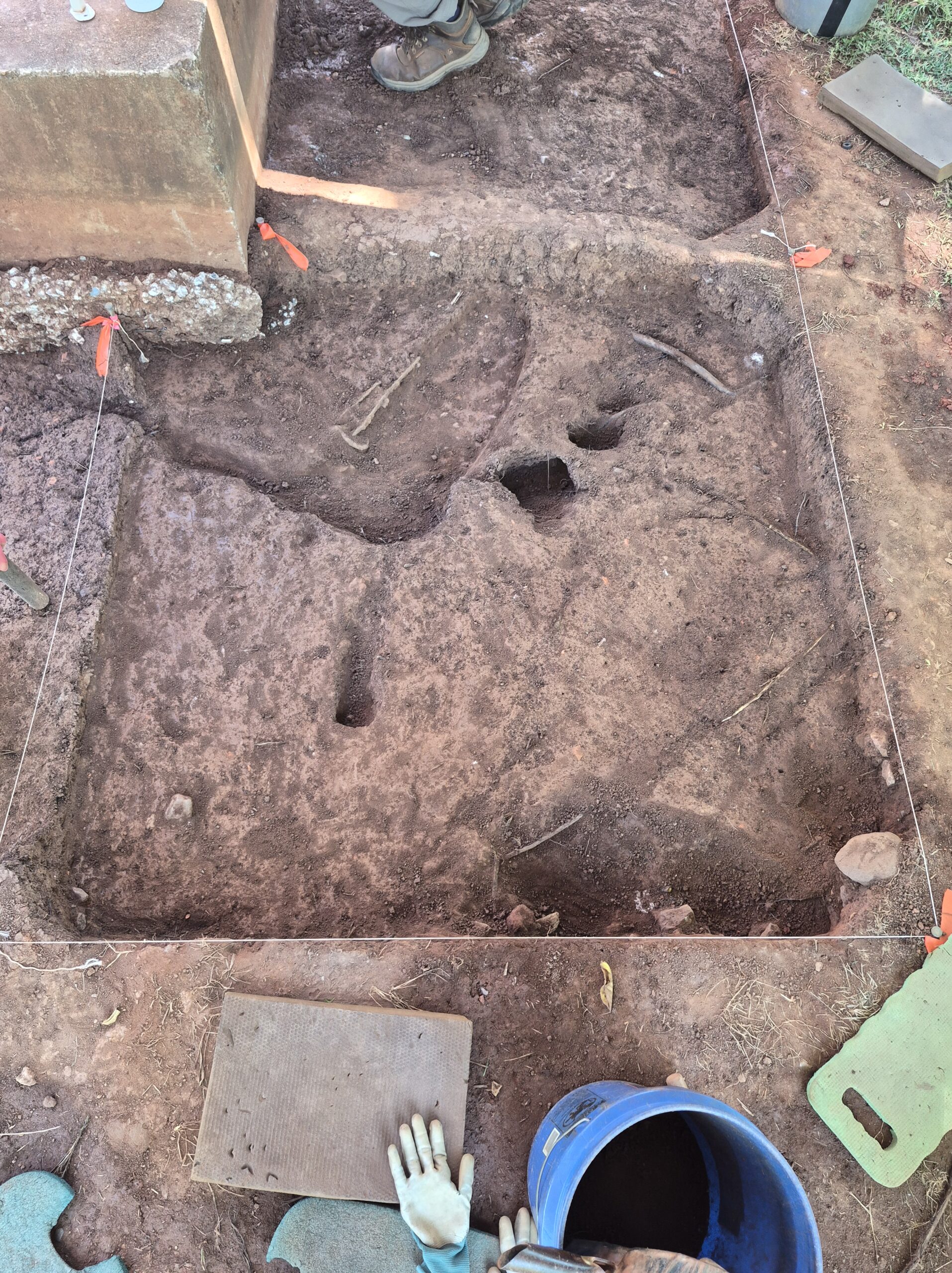
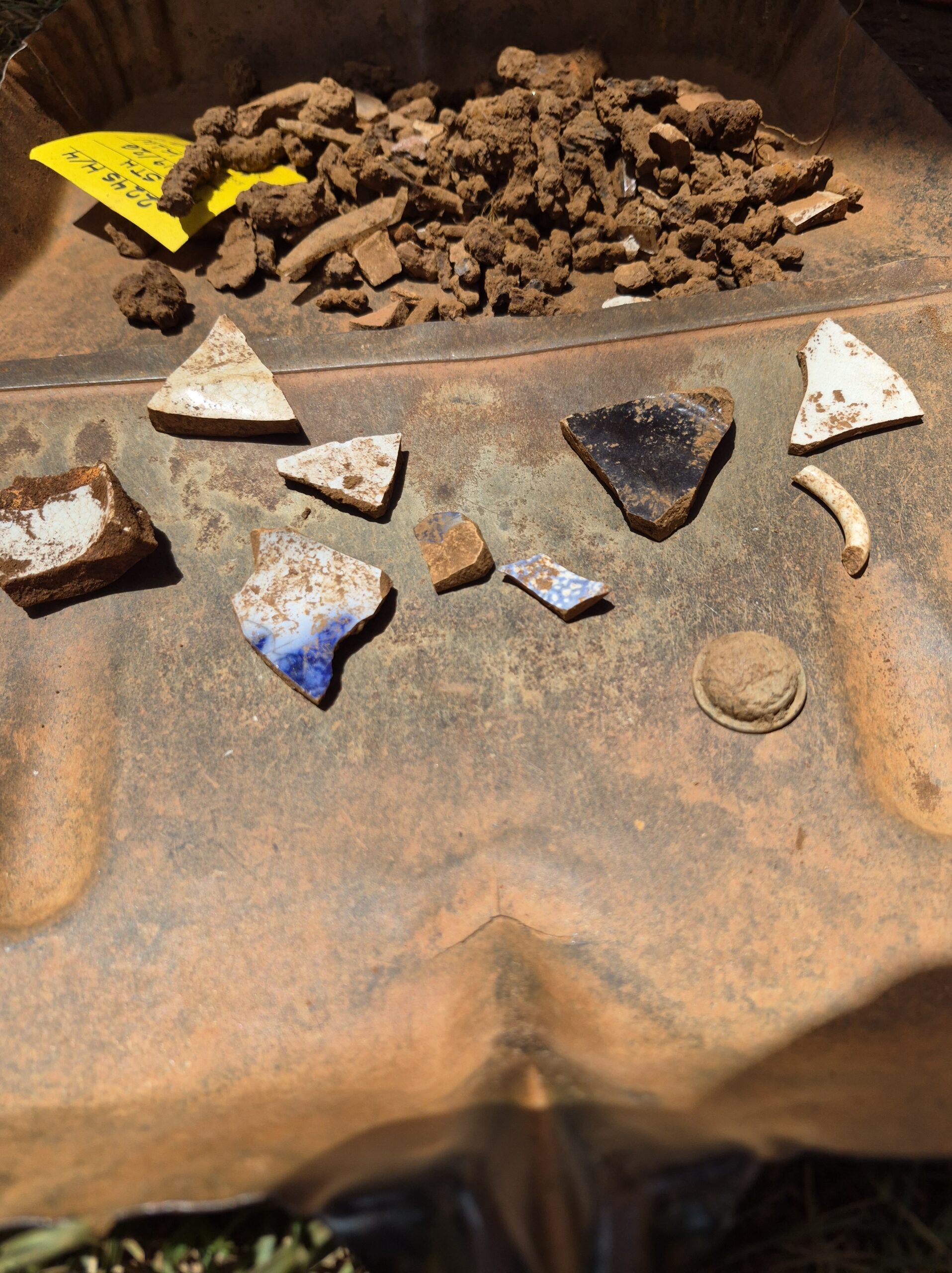
Speaking of our excavation unit at the 1857 Slave Dwelling on the south side of the house…it’s still doing its best to keep us humble. Our biggest challenge continues to be the rodent burrows that have tunneled through the area. Every time we think we’re finally getting close to the next layer, another tunnel appears, like the rodents have been plotting against us. As frustrating as they are, they’ve turned into a really good lesson in archaeological context because we have to carefully figure out what the rodents disturbed versus what was originally deposited there. It’s definitely a reminder that archaeology isn’t always glamorous, and sometimes the smallest creatures create the biggest headaches. Even with our little “helpers,” we’ve still uncovered some really cool artifacts, including ceramics, glass, nails, and a few other pieces that are helping us tell the story of the people who once lived here. My favorite find this week was a button. It might seem like a small thing, but I couldn’t help but wonder who it belonged to and what their story was. Moments like that make the slow progress and all those rodent tunnels worth it. Slow and steady wins this race.
Every day reminds me that archaeology isn’t always about finding the biggest or flashiest artifact. Sometimes it’s about putting together dozens of tiny clues until they start telling a much bigger story. I’m halfway through field school now, and one thing I’ve learned is that archaeology is equal parts science, history, teamwork, patience, and problem-solving. Also…apparently fence building. Who knew?