Archaeology Blog
2026 Field School Week 4, Part Two
By James Royall
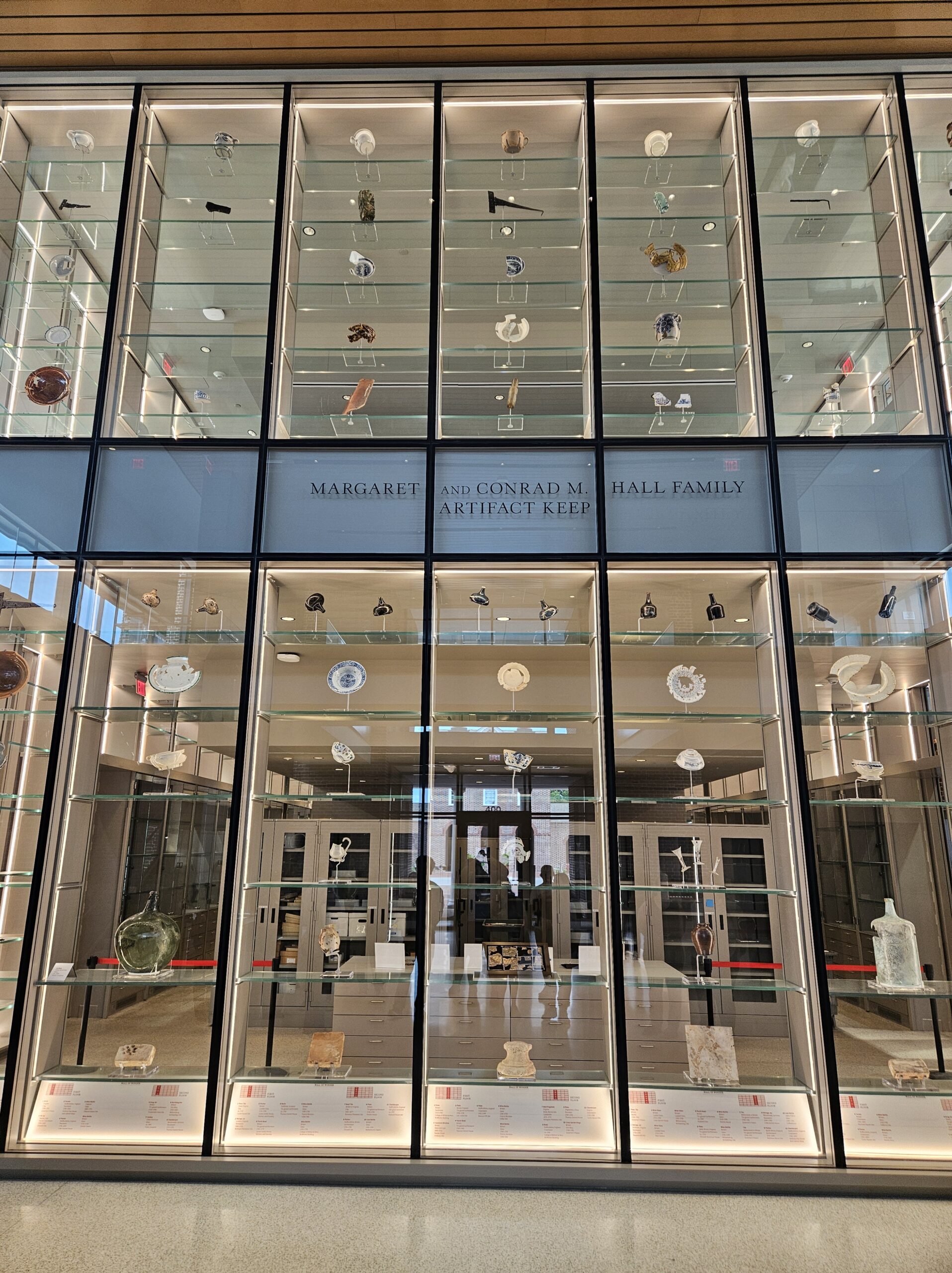
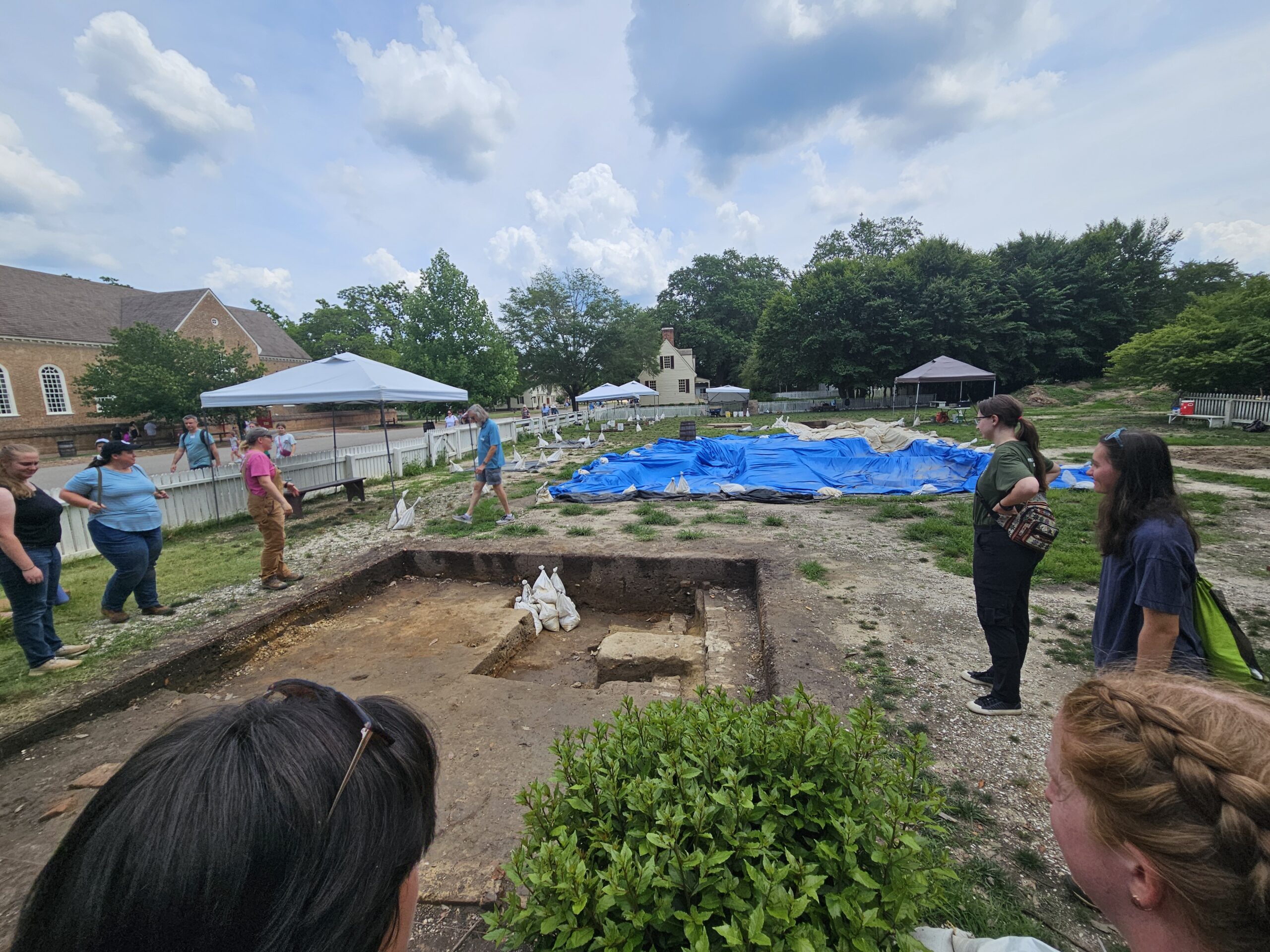
The latter half of Week Four was spent taking field trips to both Colonial Williamsburg and Historic Jamestowne. While at Colonial Williamsburg, we got a tour of the new Colin G. and Nancy N. Campbell Archaeology Center. Our tour started with the “Wall of Wonder”, a two-story tall exhibition space designed to showcase some of the best artifacts of their collection of over 60 million pieces. It was truly remarkable and awe-inspiring, deserving of the acronym “WoW”. Next on the tour of the building, we got to look at multiple labs and lab spaces. Some of the spaces we got to see included their conservation lab, flotation lab and identification lab. After we finished the building tour, we got to see their excavations at Custis Square next to the Archaeology Center and the Peter Scott House excavation on Duke of Gloucester Street. After viewing these two sites, we were allowed to walk around Colonial Williamsburg for a couple of hours until we had to check into our hotel for the night.
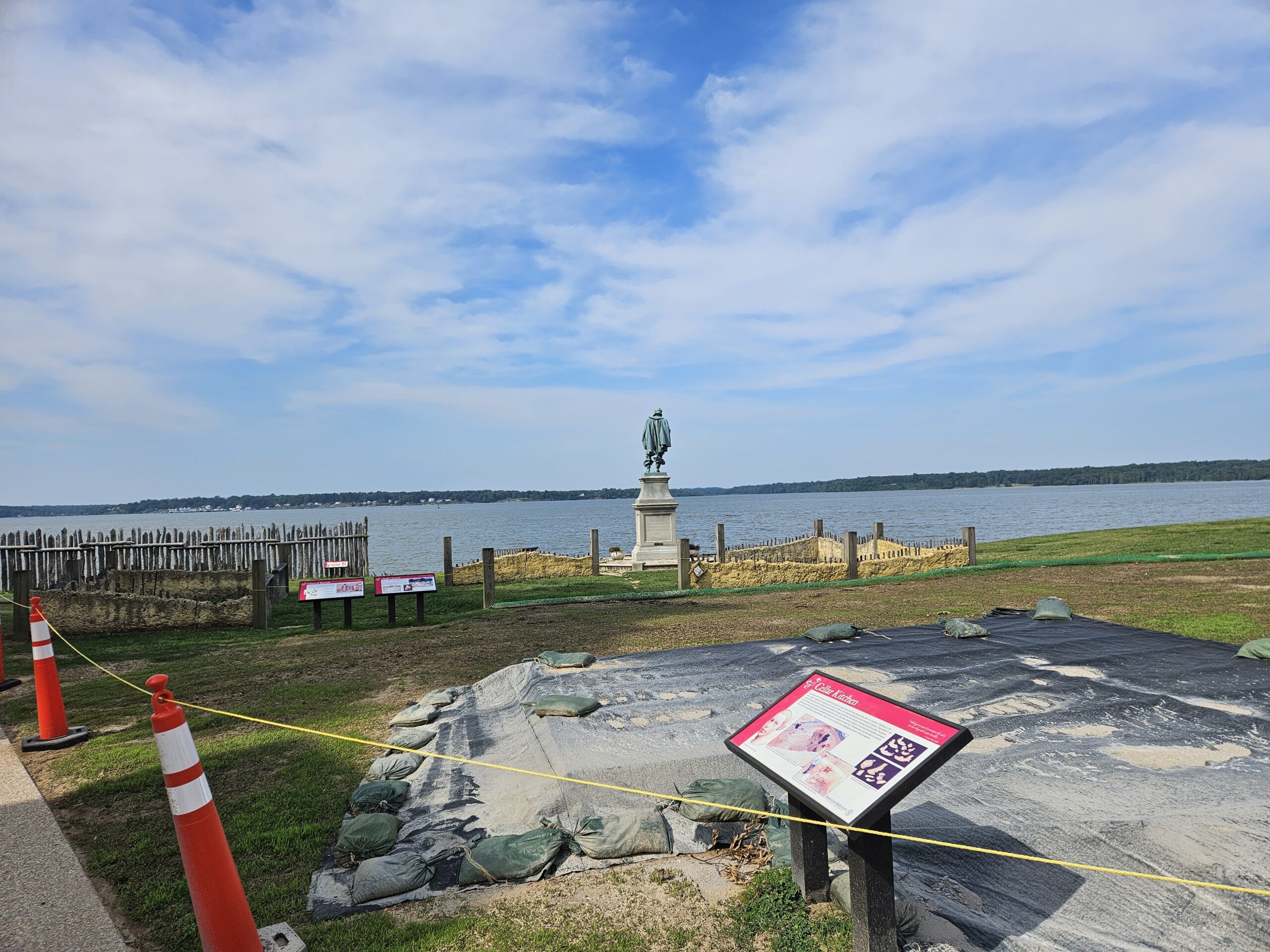
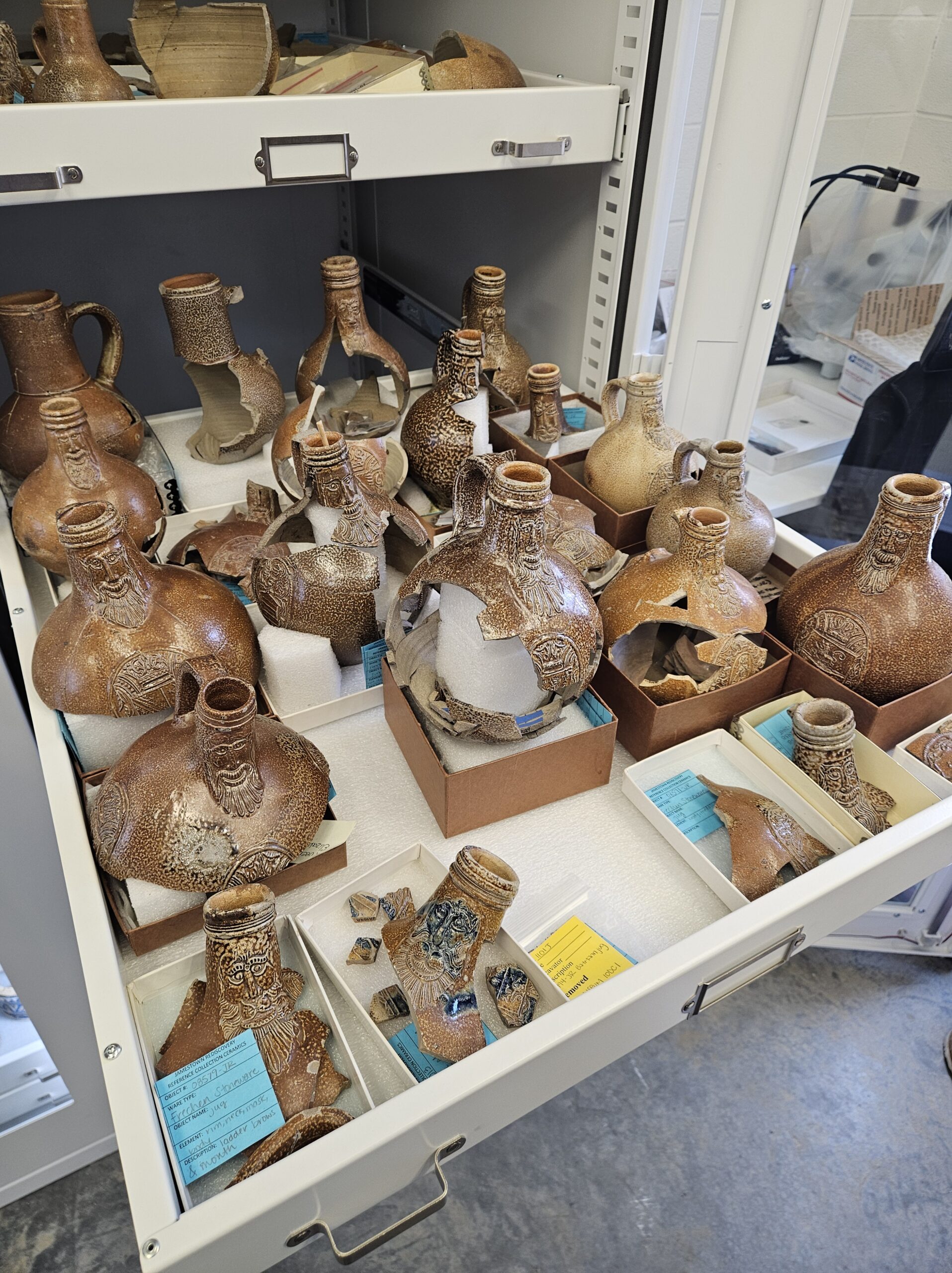
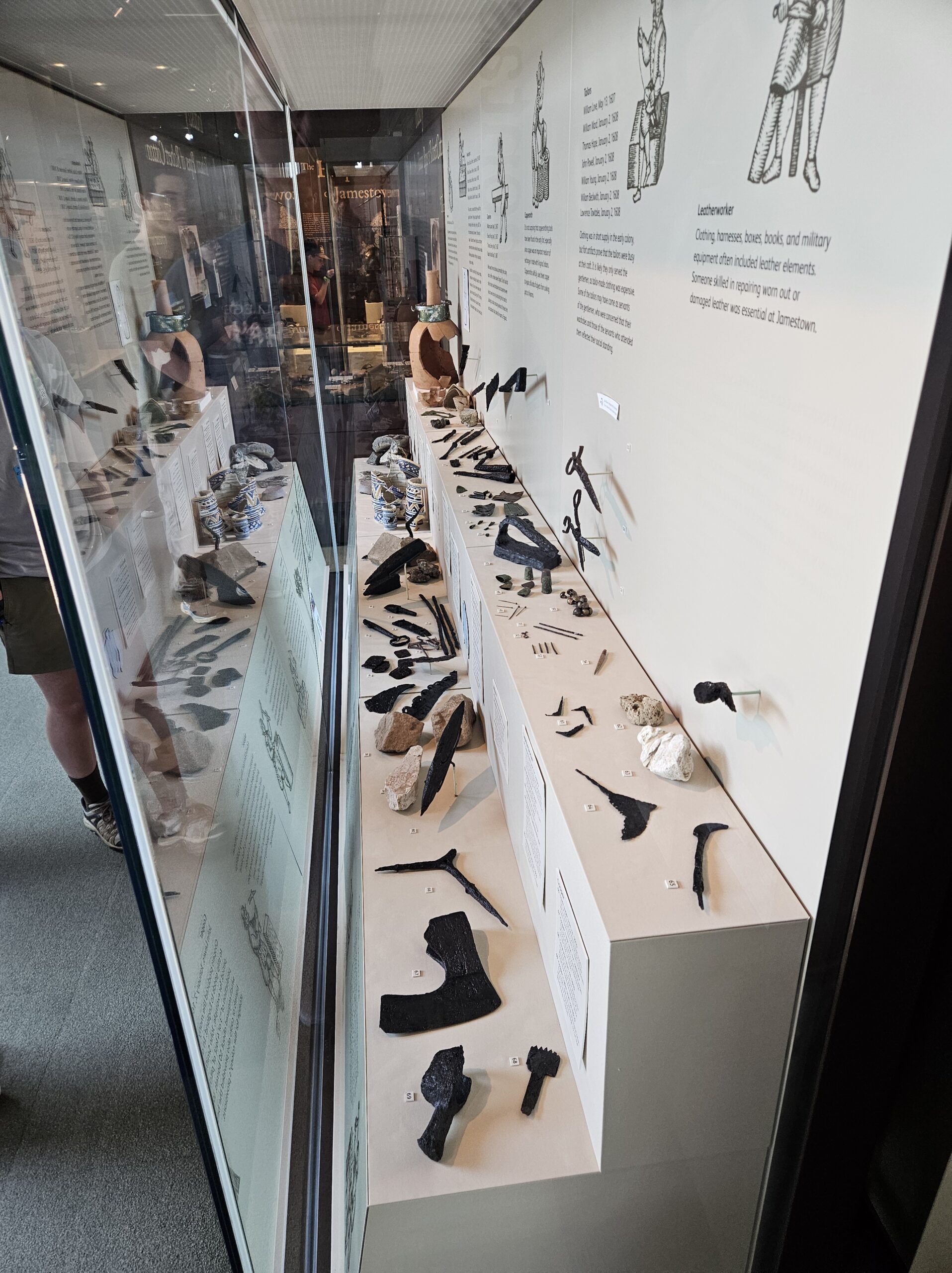
At Historic Jamestowne, our tour encompassed their active sites, the Archaeology Lab and the Archaearium. Our tour started with a site just outside the fort, where we discussed an overview of the history of Jamestown and how climate change has impacted the archaeological sites of the island, with rising tides causing the swamp on the island to grow and overtake some previous excavations. Afterwards, we walked around the fort before getting to see the rest of their active sites, where we were shown some interesting artifacts found there. We then took a walk through their conservation area as well as the museum. Within the conservation area, our group got to see many different types of vessels, including knock-off luxury oil vessels, mended glass vessels, and their Bartmann jug collection (a favorite design of ours). Inside the museum, they had exhibits highlighted by artifacts found while digging on the island. One of the most notable discoveries that was displayed within the museum is Jane, a human skull that had marks consistent with what would be expected of starvation cannibalism. An interesting fact about the museum is that it is built on top of the old statehouse, and they had the foundations of the old statehouse visible at multiple points under the floor via glass floor paneling.
Overall, these two days of field trips were fun and educational. Some personal favorite parts included the Wall of Wonder, getting to walk around Colonial Williamsburg, and walking around Historic Jamestowne.