Archaeology Blog
2026 Field School Week 6
By Kit Campbell and Adrien Penhoet
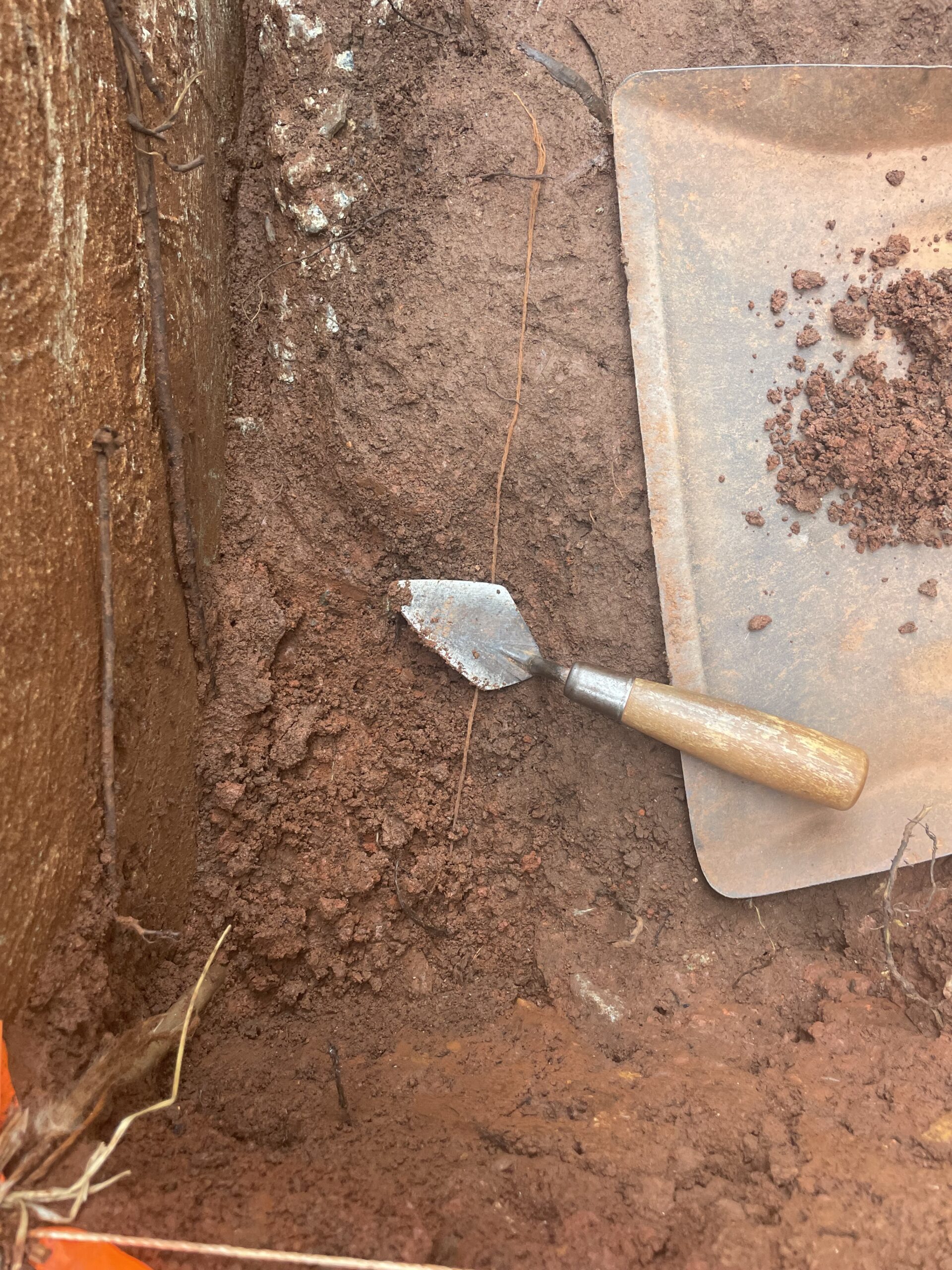
Welcome to the sixth and final week of Field School! This week the two of us were working on two adjacent units east of the 1857 Slave Dwelling, where a lean-to would have been found in the first half of the 20th century. The unit to the west was complicated for a multitude of reasons. For one, there was backfill from a previous excavation that encroached into our unit less than expected, so that was slightly surprising. Another snag that we came across was a utility trench that was roughly the same color as the backfill, so it was quite an endeavor delineating the two. The old, short trowels were especially useful in excavating the closer quarters.
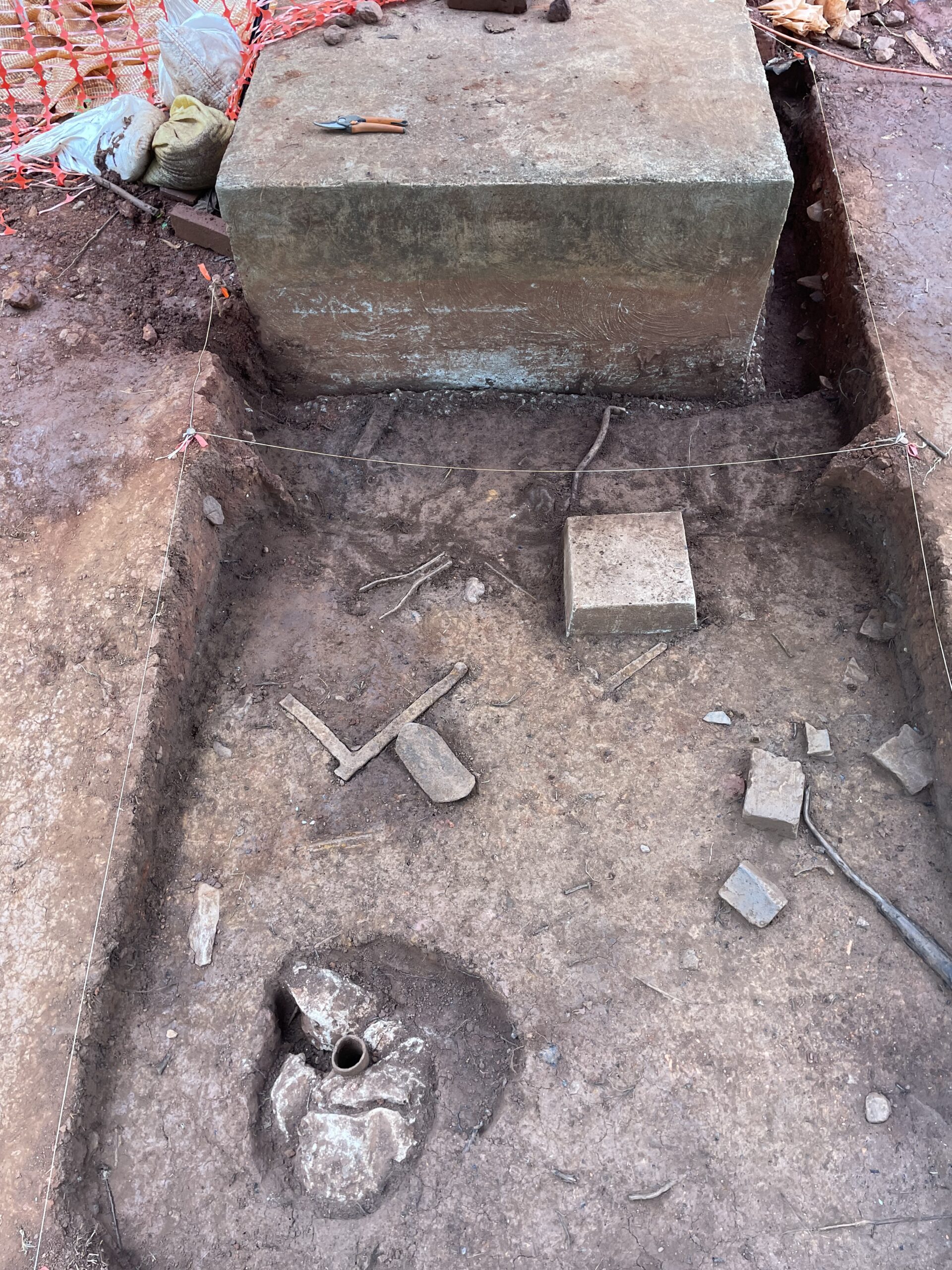
The unit to the east is where we were anticipating the remains of a support post to be. A few weeks back, the people working on the unit at the time found a small concrete block in the location we were expecting to find the support post for a lean-to shed. The unit to the west was opened shortly after to get a better view of this area since it was on the edge of this unit. As we got further down, more items associated with farming equipment, such as a cultivator blade, a hitch and a large hinge. Many pieces of metal throughout the unit as well as some bricks. We are sad to be leaving and not getting to see how the unit progresses.
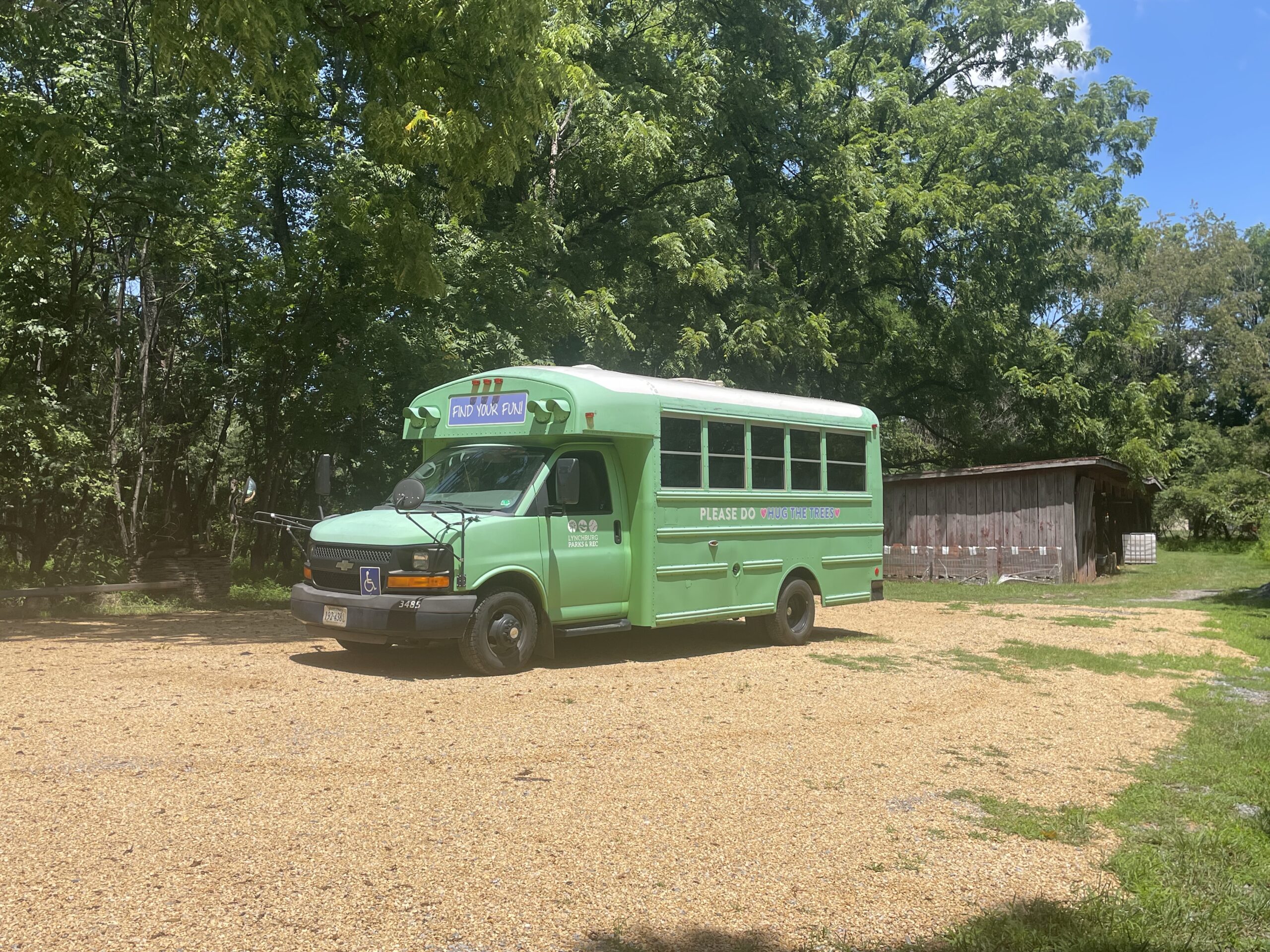
On Thursday the 9th, a busload of kids from the Daniel’s Hill Center summer camp visited Poplar Forest! We introduced them to the different units that we were working on, and we had set up stations beforehand in order to give them the chance to become personally involved with the hands-on excavations that we were doing there. One station taught the kids how to wash artifacts, while another station taught them how to screen artifacts properly. A third station taught the kids how to dig through the soil of the different units and put it into buckets to be sifted.
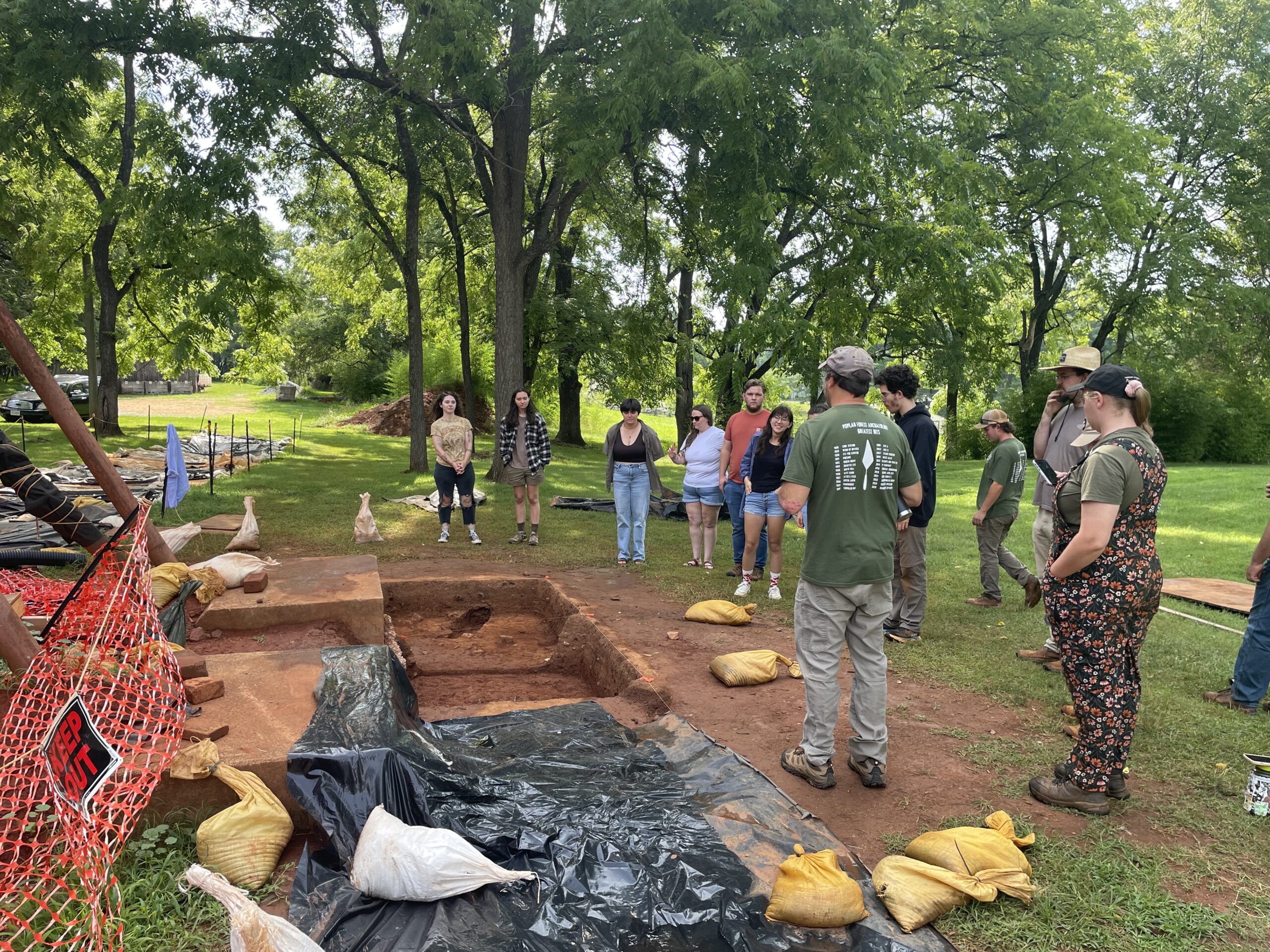
On our last day, we took a tour of the units our field school students have been working on the past several weeks. There were three units forming a backwards L around one of the concrete support blocks. The unit to the SW had some items associated with farm equipment higher up, some glass and pottery a bit lower, and less artifacts under that. They think this may have been where a garden bed had been at some point. The SE unit had a lot of glass and ceramics, as well as an abundance of rodent burrows. Lower down there were nails and a feature with charcoal and brick fragments. There were more burrows on the western portion than the eastern portion. The S unit, closest to where there once was a door, also had ceramics, glass, and a large amount of nails, as well as rodent burrows, a scallop shell and animal teeth. This is one of the units a shoe was found in. Overall, the consensus for these units was that since they were all relatively close to a door, there would have been a lot of trash being thrown out in this area. More rodent burrows were found in association with animal bones, indicating them going after food waste. More work is still to be done to see where the rodent burrows extend to and where exactly the possible garden bed was.
At the end of the week, we finished off our field school by presenting on subjects related to Poplar Forest. Some of the presentations involved discussing various ceramic jars discovered at Poplar Forest, while another talked about shank buttons that had been found in and around the 1857 Slave Dwelling.