Archaeology Blog
2026 Field School Week 1
By: Abran Aguirre & Emma Hutter
Hi, this is Abran Aguirre and Emma Hutter, speaking about our experience in the first week of the Poplar Forest field school program.
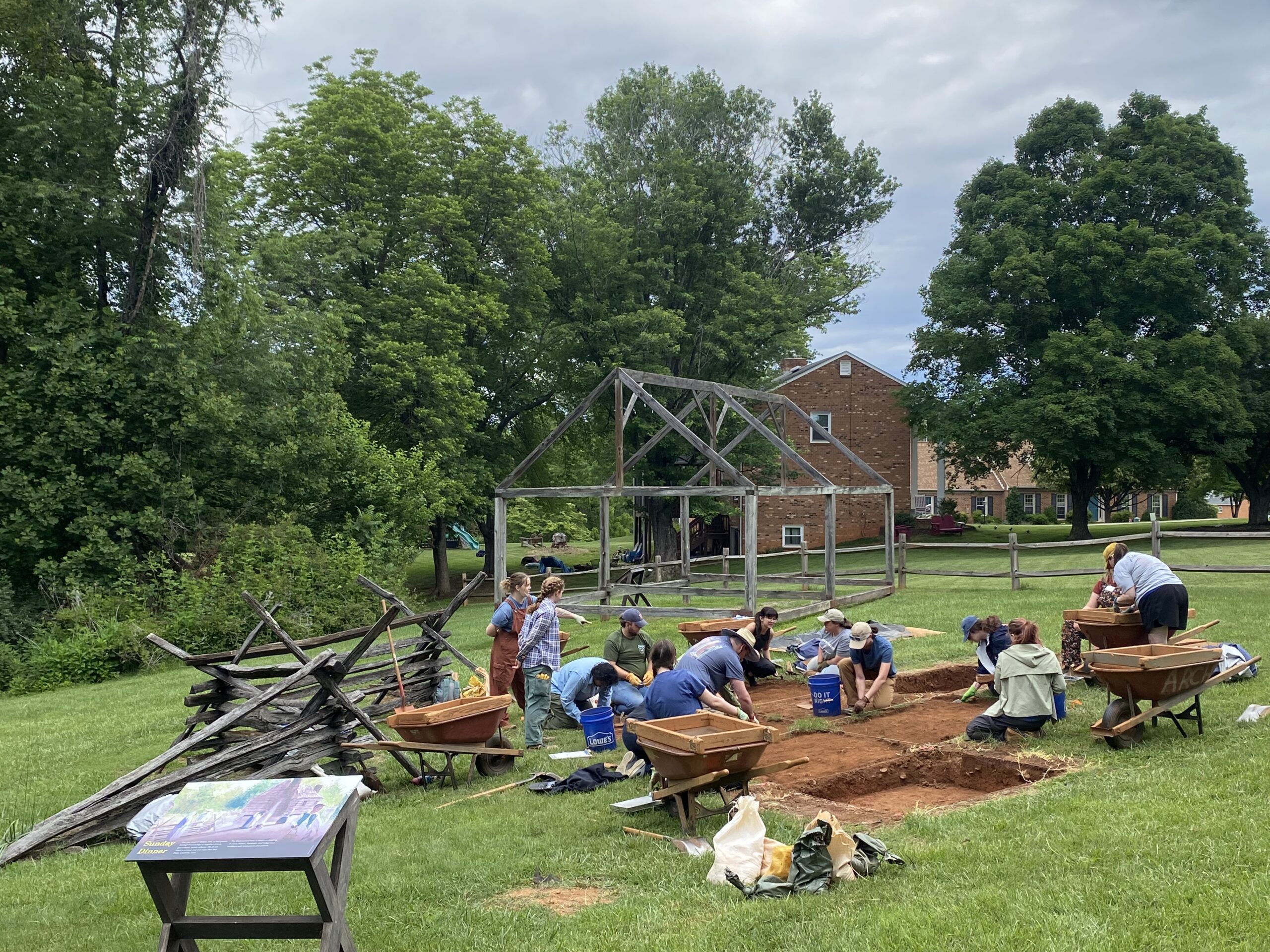
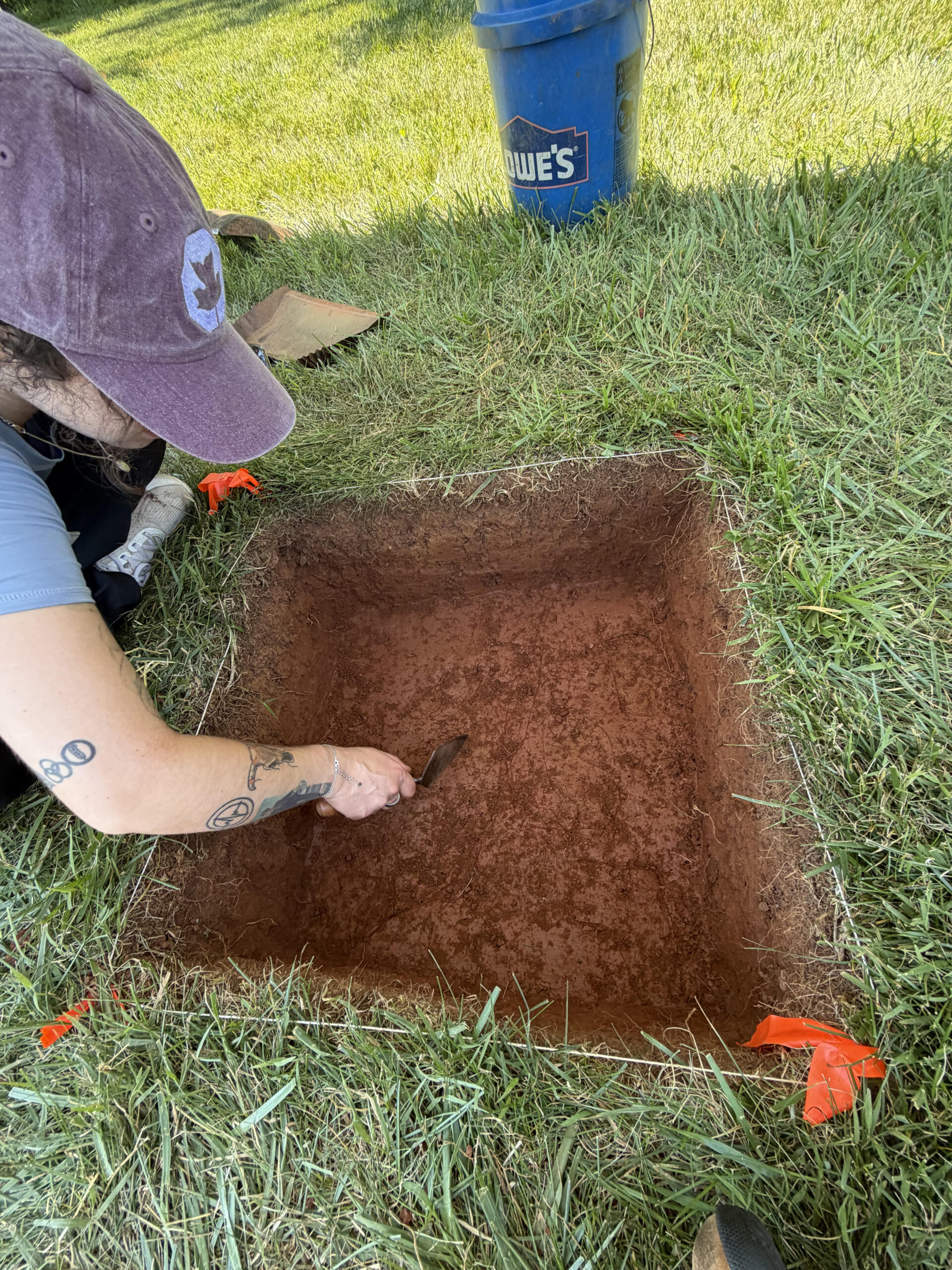
Our first two days involved learning about the general background of Poplar Forest and why it was important, as well as how archaeologists have studied and applied their research methods to uncover how the property was built, managed, and lived in by Jefferson and the enslaved families that worked there. On day one, after orientation and lectures, we proceeded to the Quarter Site, near the edge of the property boundary, which they referred to as the “Curtilage”. Here, we started digging 5×5 foot excavation units and learned the basics of removing topsoil and sifting through the dirt to reveal the soil layers we would be excavating. After that, we learned to do measurements, take profiles and pictures, and fill out paperwork for our units. We continued digging there on day two and found pieces of charcoal, ceramic, and glass.
On our third day we moved outside the Curtilage and began working on a new survey. Even though the survey is outside the Curtilage, it can still tell us a lot about what went on in that area. Instead of normal 5x5s, we dug smaller 2×2 units and began the digging process over again. What was interesting about these new 2×2 units was that the depth of the soil layers and the amount of the artifacts varied across the units. Some only found a few artifacts, while others found more. We continued excavating here on the fourth day. So far, we have made some interesting discoveries, such as glass, metal, slag, and a few sherds of pearlware ceramics from the 18th to early 19th century. We have not finished our units here yet, but we are eager to continue digging next week.
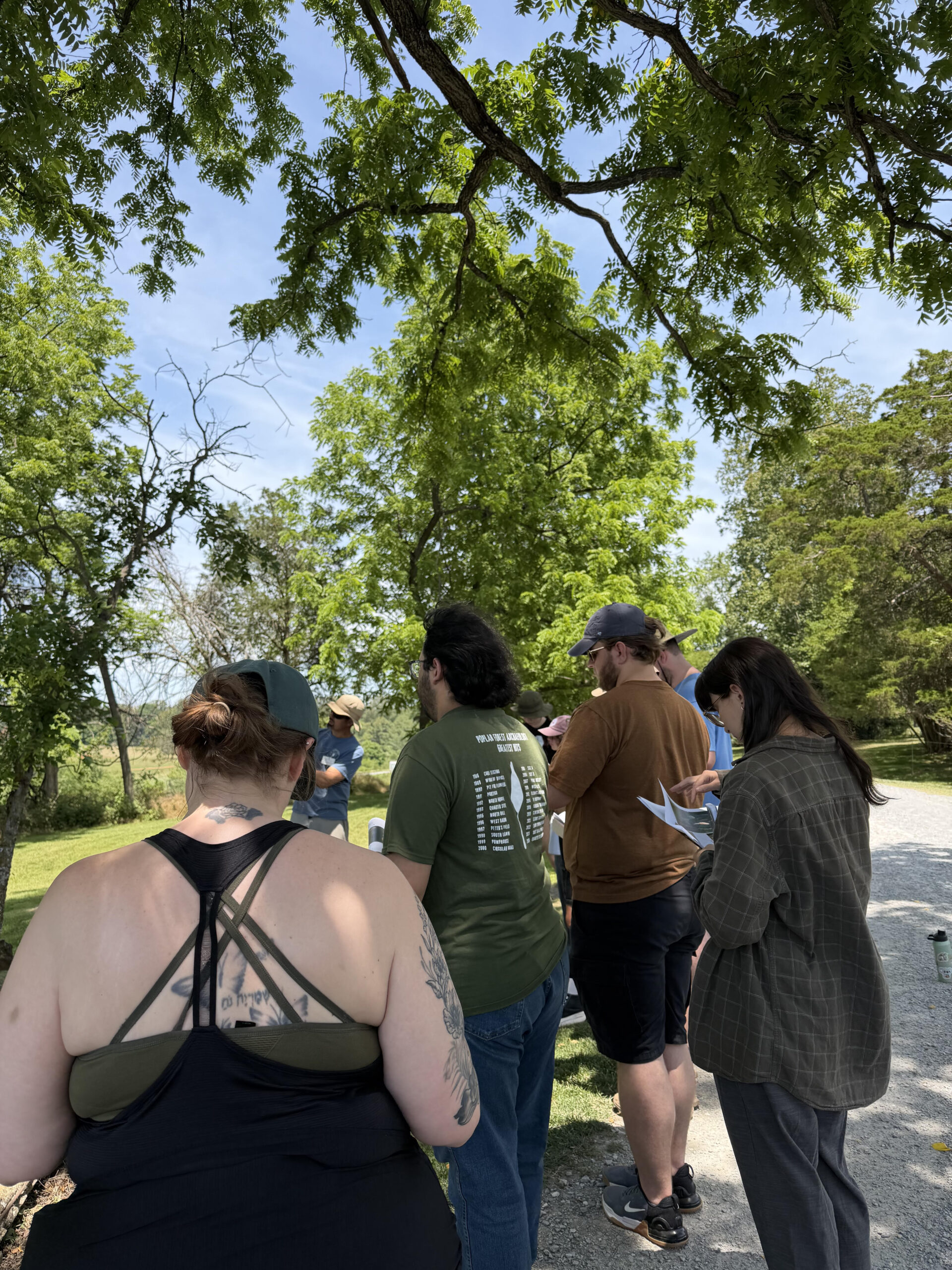
On the 5th day, we had the opportunity to take a tour of the house and property along the trail. We learned that the poplar forest mansion was built as a retreat home for Thomas Jefferson, where he would occasionally step away from his public life at Monticello. Because this was a more private residence, it had a more elaborate, unconventional design than his Monticello home, and he enjoyed getting away with very personal design. Along the trail, we learned more about the rest of the property, such as some older buildings which no longer stand, such as an old barn. We also learned more about the original layout of the land when it was owned by Jefferson and his family. Along the way, we also had the opportunity to see the names of the enslaved individuals that lived and worked on the property in 1819.
Overall, it was a very informative first week, with many positive experiences and important lessons for us all, and I look forward to the next 5 weeks of the field school!